
Cyberdise AG

Author : admin

Cyberdise Release V3.1 – Printable Campaign Reports, Template Preview, and New Channels to Report Suspicious Emails

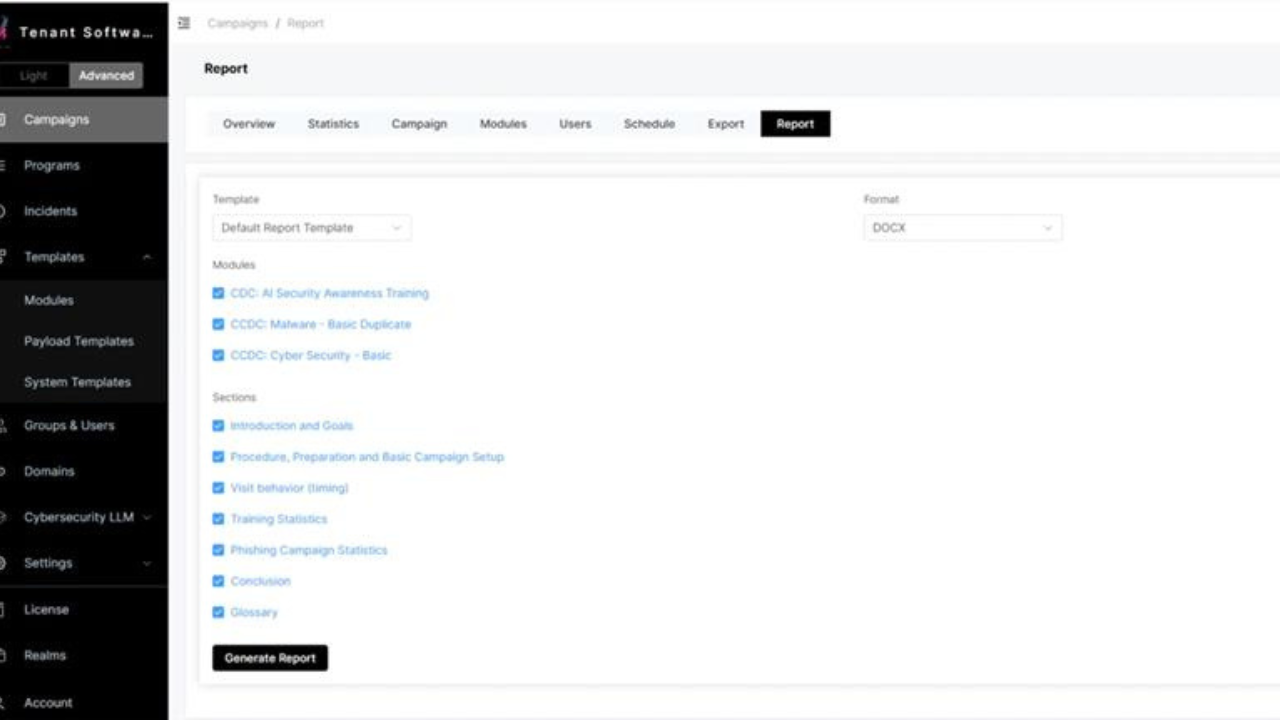
Printable campaign reports can now be generated from customizable templates, enabling Operators to create stakeholder-ready reports in just a few clicks. Templates support editable sections, dynamic variables, header image branding, and rich content customization. Reports are generated directly from campaigns and exported in Excel, Word, PDF, or HTML formats with configurable charts and fields. A default Cyberdise template ensures consistent, professional reporting.

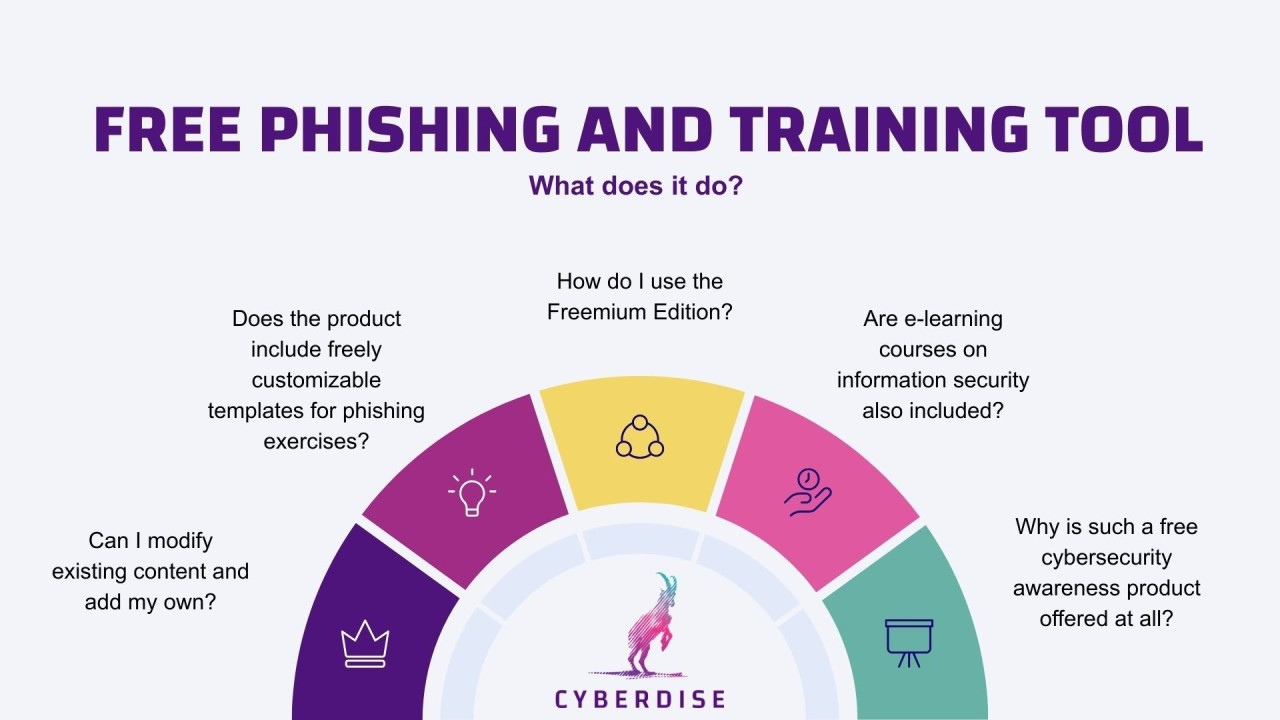
What Does Our Free Phishing and Training Tool Do?

What is CYBERDISE Freemium Edition?
It is a free phishing tool and learning environment where users can complete cybersecurity courses. Technically speaking, it is an attack simulator and a lean LMS including a content editor and user management.

What does the solution include?
The phishing simulator, learning management functionalities, two dozen attack templates, a dozen e-learning modules on information security, a content editor for customizing templates, and recipient management.

Why We Offer a Free Phishing and Training Solution and Actively Maintain It?

Some may wonder why CYBERDISE Awareness provides a free solution for phishing simulations and cybersecurity training at the highest level. Anyone who thinks this is purely for marketing purposes is completely wrong.

I need to give a bit of background so you can understand our motivation for offering a free phishing tool. It’s about effectiveness, the market, and our own standards – and yes, also about marketing 😉

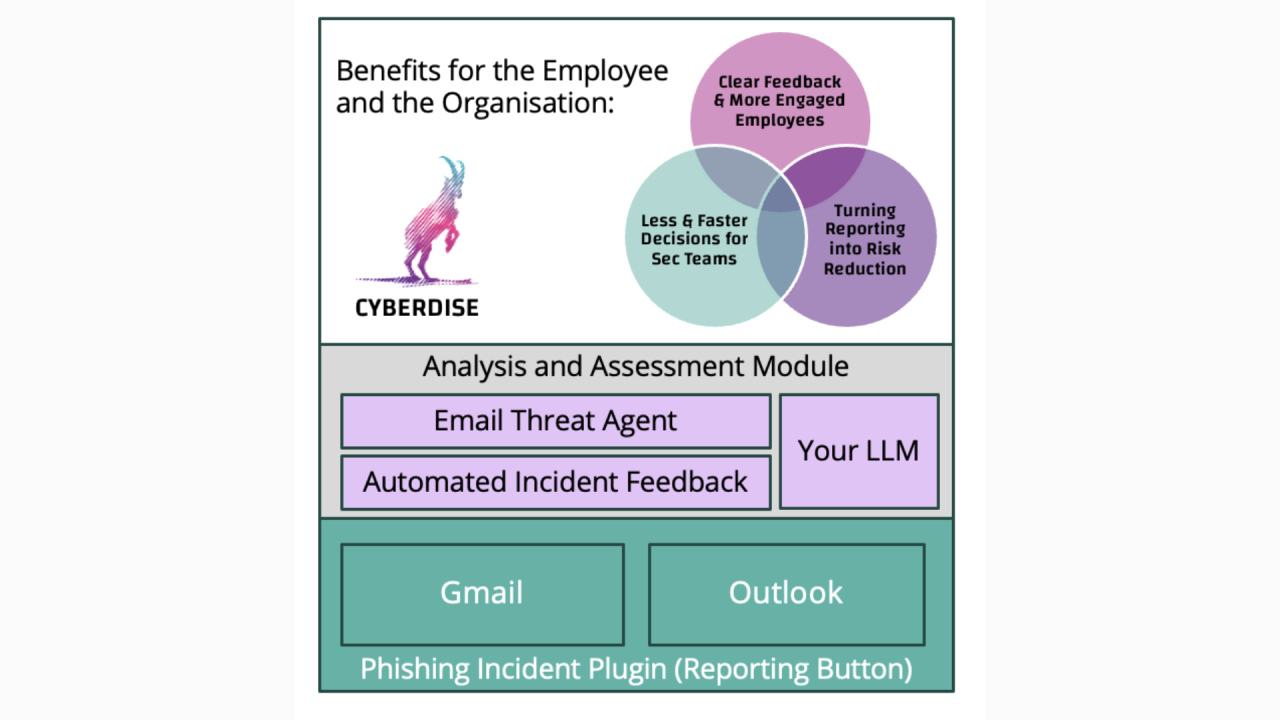
When Employees Report Suspicious Emails – It Really Matters How it Happens and What!

The Human in an AI-Driven Threat Landscape – AI did overpass the human in writing phishing emails in 2024 – already two years ago[1]. It is therefore not surprising that nowadays, virtually all phishing attacks are created by AI agents. They write more convincing phishing, in a personalized way and they can process huge volumes of messages at almost no cost. There will always be malicious messages that outsmart even the best filters and end up in your mailbox. And these will be all the more dangerous.

So, organizations must empower the employees and IT-engineers and they should respond with the same level of AI-enabled automation. That’s why Cyberdise applies AI where it matters most

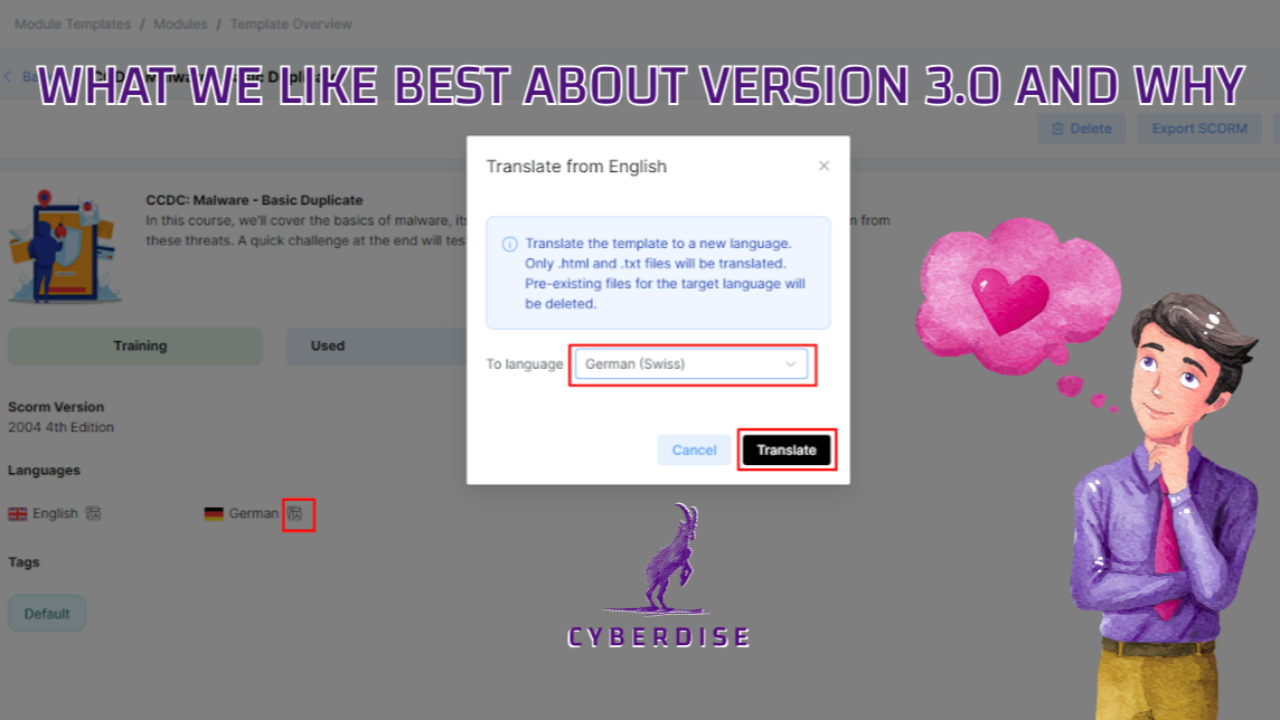
What We Like Best About Version 3.0 and Why

CYBERDISE 3.0 contains significant new functionality in AI phishing, LMS and training, threat reporting and message analysis and even architectural enhancements. That’s why it’s a great release!

Version 3.0 since early 2026. Those who want to know what’s exactly in the release, please check out the release-notes. But here I’d like to cover the three to four features we love most.

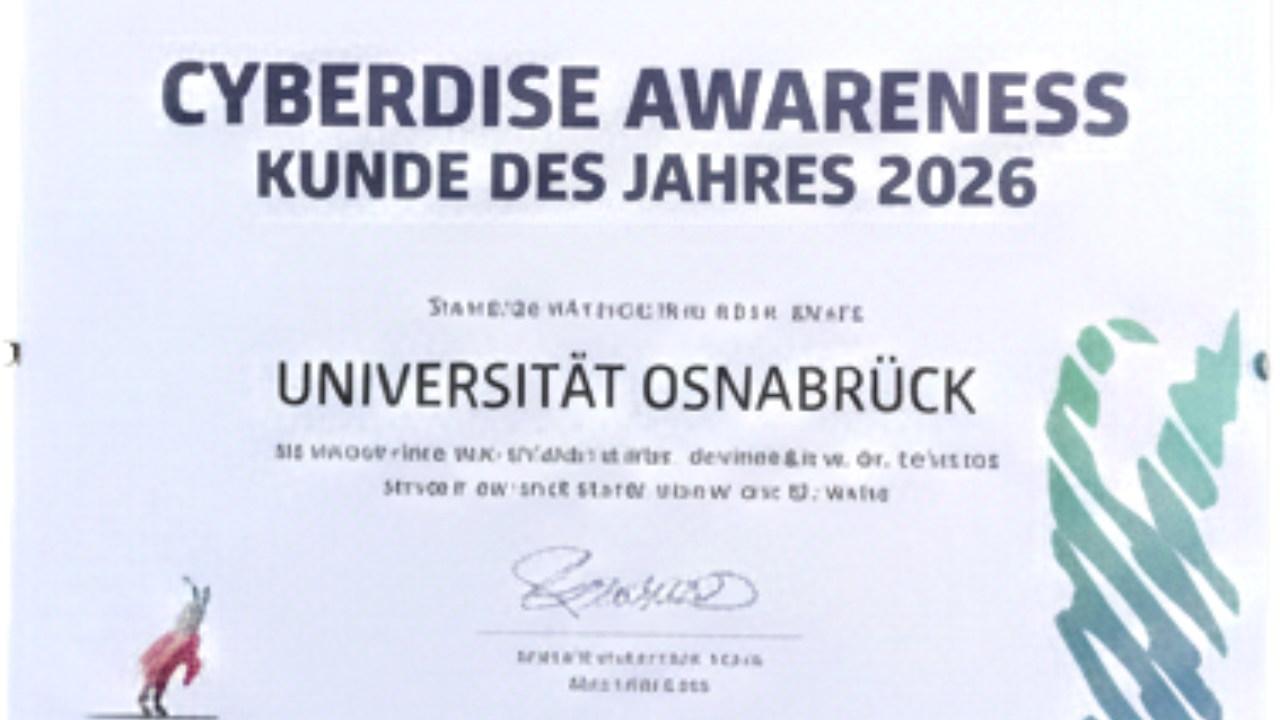
Why the University of Osnabrück is our Awareness Customer of the Year

The University of Osnabrück receives the “Awareness Customer of the Year 2026” award for the exemplary implementation of CYBERDISE in an on-premise configuration. No other customer has deployed our platform productively at a comparable speed: only a few weeks elapsed between order and the first productive campaign.

We were particularly impressed by the lean, efficient, and largely independent implementation – as well as the consistently professional, proactive, and prompt communication. This combination makes the University of Osnabrück a true showcase customer. We are all the more pleased that the university has agreed to become one of our reference customers.

400,000, 10 — And Why 2025 Was Better Than I Thought Until Yesterday

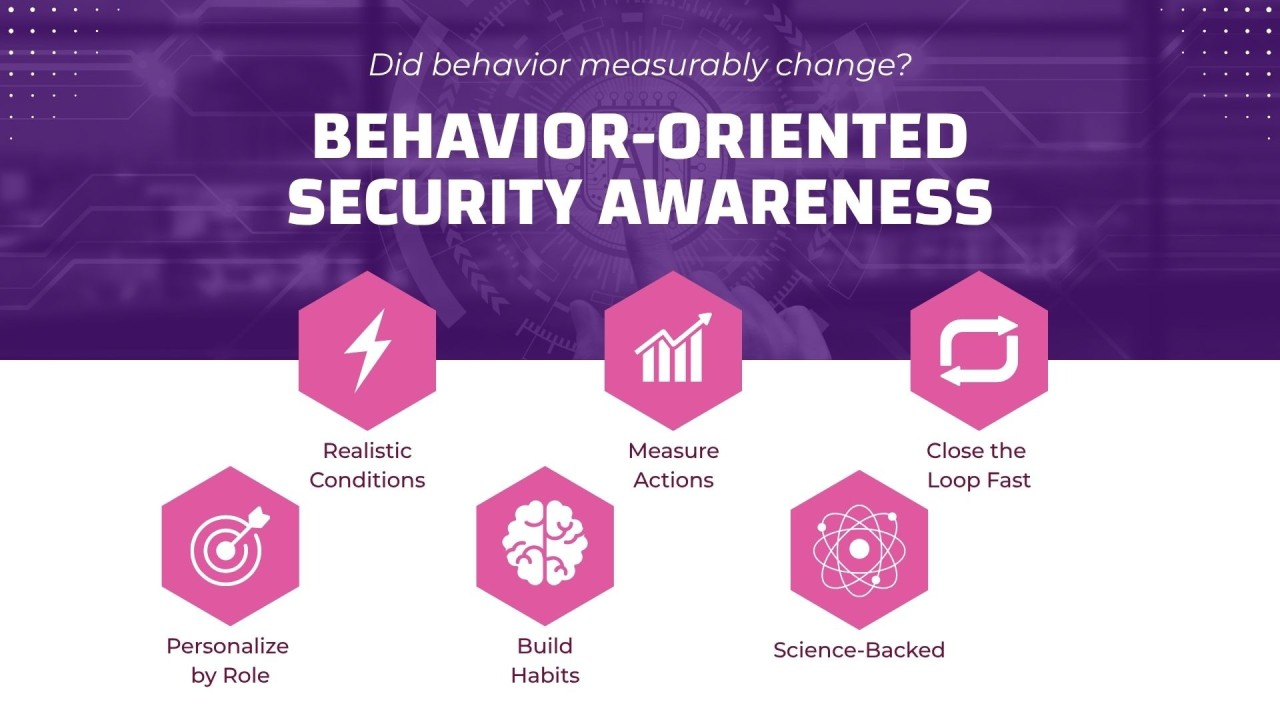
In CYBERDISE AWARENESS, two concepts are often used interchangeably – attitude and behavior. They are related, but they are not the same. Confusing them is one of the main reasons why many awareness programs fail to deliver lasting risk reduction.

Attitude is shaped primarily through information, communication, and training. Traditional awareness programs focus heavily on this layer: policies, videos, e-learning, and explanations of “what could go wrong.”

Research confirms that training can indeed influence attitude. Employees often report higher awareness, stronger responsibility, and better understanding after training interventions.

Attitude vs. Behavior: Why Cybersecurity Awareness Needs Both

In CYBERDISE AWARENESS, two concepts are often used interchangeably – attitude and behavior. They are related, but they are not the same. Confusing them is one of the main reasons why many awareness programs fail to deliver lasting risk reduction.

Attitude is shaped primarily through information, communication, and training. Traditional awareness programs focus heavily on this layer: policies, videos, e-learning, and explanations of “what could go wrong.”

Research confirms that training can indeed influence attitude. Employees often report higher awareness, stronger responsibility, and better understanding after training interventions.

Which new CYBERDISE Feature we built in 2025 you didn’t know about?

What features were we able to roll out? A review.

Modern attacks happen in seconds, but awareness teams often work in days or weeks. We wanted to close this gap. CYBERDISE 2025 brings together AI reconnaissance, autonomous campaign components, multi-organizational management, and a revamped content ecosystem. It’s a platform that not only trains, but also systematically scales security culture—from medium-sized businesses to MSSPs. At the end of the year, we will showcase the features developed this year that will help you achieve this goal. Which ones are you not familiar with yet? Take a look for yourself at the end of this article!

Why Security Awareness Will Always Work – If You Build and Measure the Right Thing

Recent discussions around the effectiveness of cybersecurity awareness have been reignited by high-profile media coverage. Most prominently, a Wall Street Journal article drawing on the study “Understanding the Efficacy of Phishing Training in Practice” questions whether phishing simulations and awareness training lead to meaningful risk reduction.

The debate itself is healthy. The conclusions drawn from it, however, require more nuance.

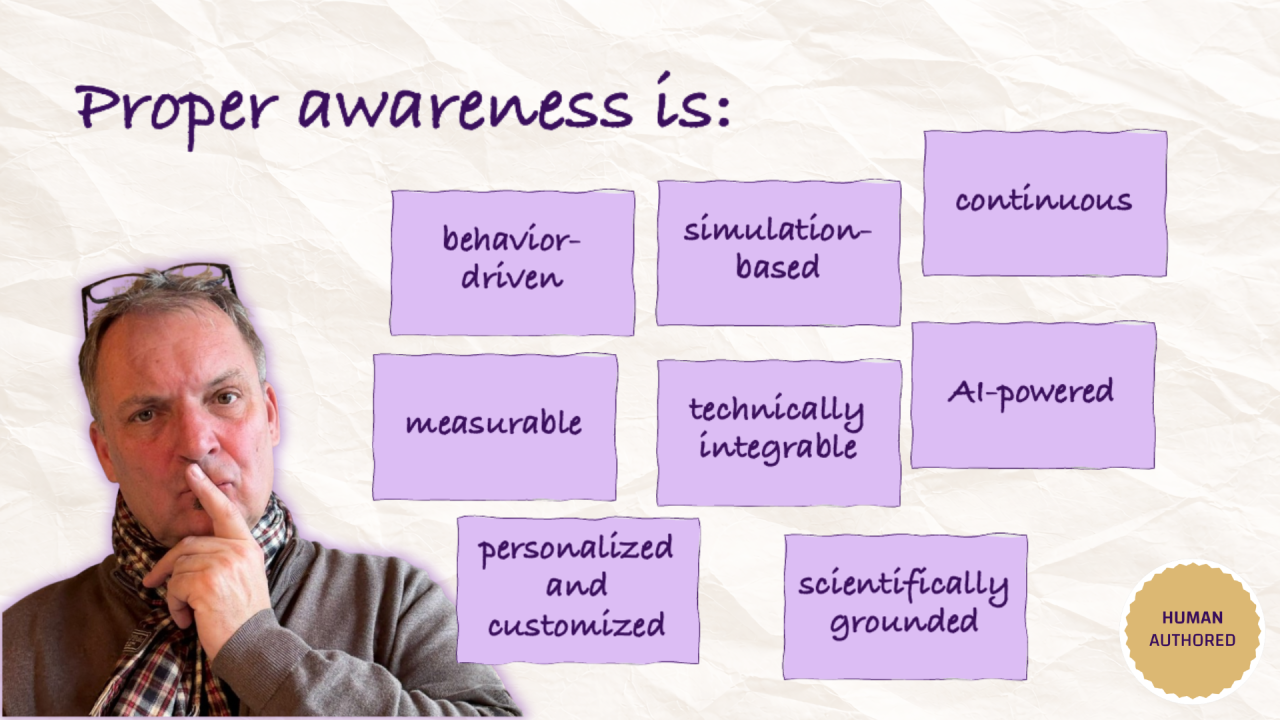
A growing body of empirical research shows that well-designed cybersecurity awareness programs do improve real-world cyber risk behavior. What often fails is not awareness as such, but narrow interpretations of what awareness is, how it should be embedded organizationally, and how success should be measured.

How Often and How Fast Should I Phish My Colleagues in 2026?

How many phishing simulations should be conducted and how frequently users should be confronted with cybersecurity eLearning is a recurring topic in consulting for awareness programs and campaigns.
This topic is far from academic – it’s highly relevant for practical application.
A sensitization effect, once achieved, begins to crumble after about three months, and after six months, maximum erosion has essentially been reached. There are solid studies on this, and our latest scientific research shows a very similar result.
However, the statements made about the quantity and timing of awareness measures must be considered with nuance. It would be dangerous to derive simple, universally applicable rules from them.

What CUSTOMERS DO WRONG When Starting Cybersecurity Awareness Programs

Common possible missteps on customer-side in implementing Security Awareness projects

It’s like any other project: you think it’s too easy, you don’t listen or listen to the wrong experts, you think you’ll master it, or you think you can do it alone, you don’t talk to each other enough and the goals and requirements are not as clear as they should be. If you then start with an inappropriate mindset and management fails to recognize the purpose, value and benefits of awareness, then the project can get off to a very bumpy start.

Can AI Detect Malicious Intent in an Email?

Phishing emails are becoming harder to detect, even for humans. A recent study tested various large language models (LLMs) for their ability to recognize malicious intent in emails, revealing significant differences in performance.

One standout was Claude 3.5 Sonnet, which scored over 90% at low false positive rates and even flagged suspicious emails that humans overlooked. When explicitly asked to assess suspicion, it correctly classified all phishing emails while avoiding false alarms on legitimate messages. However, it struggled with conventional phishing emails, achieving only an 81% true-positive rate in that category…

Cyberdise Version v2.9 – Intelligent Automation and Global Accessibility – Advancing AI, Localization, and Security

Operators can now automate group membership using conditional logic instead of manual assignment. These dynamic groups are built on existing base groups, with membership automatically recalculated whenever user data or group configurations change. A dedicated configuration page allows full control over rule definition, priority, and activation, ensuring real-time updates without logical conflicts.

Is It Really Easier When Product-Market Fit Is Achieved? Well…

Conversely, does this mean that once you have achieved product-market fit, you can start scaling immediately and you are sure to be successful? I would say: maybe, probably not.

Yes, 9 out of 10 start-ups fail. And yes, most of them probably failed because they offered something that the market didn’t really want. But I do have some reservations about the rest becoming successful because the PMF has been reached.

Risk Attitude vs Risk Behavior: Are You Training the Wrong Thing?

Despite comprehensive security awareness training, many organizations still continue to have cybersecurity breaches resulting from human error. We believe that it is because many people understand cybersecurity threats in theory but struggle to apply the knowledge in practice consistently to act safely.

This gap between risk attitude (knowing what is risky) and risk behavior (actually acting securely) is what today’s article will be about 😉

Cyberdise Version V2.8 – Full Visibility and Control – Introducing Billing & Operational Enhancements

A new Billing feature has been introduced to provide detailed information about the Realm or Tenant-level usage and associated billing metrics. It enables administrators to monitor and manage consumption effectively, supporting better cost control and reporting.
It allows tracking of key data points, including: total number of users, users served, messages sent, domain purchases and other other billable metrics.

What the 2025 IBM Data Breach Report Really Tells Us

The IBM Cost of a Data Breach Report has been published every year for two decades.

It’s often read for the numbers: the global average breach cost (now $4.4M), the top industries, or the fines (which in the U.S. push average costs to $10M).

But look a little deeper and with your own expert-view, and this year’s report says something more fundamental about cybersecurity awareness.

The Rocky Road to Reducing Human Error (M&S Lost £300M to Phishing, May 2025)

The Marks & Spencer Cyber Attack shows it. Large companies with complex organizations, many languages, multiple LMS systems, heterogeneous metadata landscapes and high process variance need cybersecurity awareness solutions that are designed to meet such challenges. Otherwise, employee awareness of cyber risks will degenerate into a farce or there is a risk of group-wide failure.

Cyberdise Version V2.7 – Smarter targeting, deeper insights, and better control.

This experimental feature enables automatic open-source intelligence gathering based on specified parameters like name, email address, or other optional data points. The module searches publicly accessible sources (e.g. social media, forums, public registries) to build a preliminary user profile. These insights are then used to power ultra-targeted, AI-generated phishing simulations – tailored to the individual’s context, tone, and risk profile.

The biggest cyber heists in history: The bybit, MGM and Sony hacks – similarities, effects, damage and awareness potentials

The similarities and differences are impressive – in our irregular series ‘The biggest cyber heists’, we look at the biggest cyber heists in history. Today’s post analyzes the bybit, MGM and Sony hack. We summarize what happened, how it happened, who noticed it, what damage was done and what the consequences were. We then examine what measures would have been useful to counteract this and whether something could have been done with more vigilance.

Cyberdise Version V2.6 – Enhanced Customization, Security, and Campaign Management

The new Website Cloner feature enables users to quickly duplicate existing websites and convert them into landing pages for campaigns. The module has been enhanced to allow cloning of any website directly from the landing edit page using a modal form, improving accessibility and ease of use. Users can further customize cloned pages by adding data entry fields, file downloads, and other interactive elements.

Why Hackers Love Your Social Media – and How to Stop Them

In today’s hyper-connected digital world, information is power. Unfortunately, this power isn’t just in the hands of the good guys. Cybercriminals are increasingly turning to Open Source Intelligence (OSINT) to fuel their attacks, particularly phishings. By exploiting publicly available information, attackers can craft highly personalized and convincing scams that are harder to detect and resist.

Investors for CYBERDISE Awareness? – Why We Are Looking for Capital

A great awareness solution for complex needs – What began a year and a half ago as a business idea for AI-driven awareness tailored to more complex customer needs has truly made an impact! CYBERDISE now trains and tests over 40,000 users. With the latest version 2.5, we have demonstrated that our solution is competitive and is licensed by reputable large clients and partners.
Specialized cybersecurity service providers and larger organizations have unique requirements for their cybersecurity awareness programs. CYBERDISE effectively meets complex and specialized security awareness training needs.

The Psychology of Phishing Attacks

Published Date: December 5, 2024 Have you watched “The Great Hack” movie? A must-watch for insights into the psychology behind phishing attacks! Psychology and Phishing Attacks Phishing attacks rely heavily on psychological tricks, which is why understanding these tactics is so important for cybersecurity awareness. Surprisingly, nearly half (47%) of successful attacks still happen because[…]

Cyberdise Version 2.1 – Enhanced Security and Usability Features

Cyberdise Version 2.1 – Enhanced Security and Usability Features Published Date: October 30, 2024 Release V2.1.0 New Features 1. File-Based Attacks Campaign operators can now integrate HTML files into phishing simulations,whether as email attachments or links to websites. This functionality enhances the monitoring of download activity, providing valuable insights into user behavior and potential security[…]

Cyberdise Version 2.0 – Elevated Security and User Management

Cyberdise Version 2.0 – Elevated Security and User Management Published Date: July 19, 2024 Release v2.0 New Features: 1. LDAP User Import Effortlessly integrate your existing user database with our new LDAP User Import feature. This functionality allows operators to seamlessly import users using LDAP(s) from directory services like Microsoft Active Directory (AD) and Microsoft[…]

New Cyberdise templates for phishing simulations – Content April 2024

New Cyberdise templates for phishing simulations – Content April 2024 Published Date: April 17, 2024 Over thirty new templates for phishing simulations are now available for download. Training alone is not enough! Majority of successful cyber-attacks start with a phishing email that has not been detected by an employee. That’s why it’s really essential all[…]

Cyberdise Version 1.7 Introducing Programs and Whitelabel Features

Cyberdise Version 1.7 Introducing Programs and Whitelabel Features Published Date: April 10, 2024 Key Features of Cyberdise Version 1.7: 1. Programs: With the introduction of “Programs,” Cyberdise revolutionizes the approach to cybersecurity training. Programs enable the consolidation of campaigns into cohesive units, streamlining the management of comprehensive courses. Each Program encompasses a series of campaigns,[…]

AI Phishing Simulation by Cyberdise Awareness Takes Off

AI Phishing Simulation by Cyberdise Awareness Takes Off [Press Release] Published Date: March 26, 2024 AI Phishing Simulation by Cyberdise Awareness Takes Off Right on time for the InCyber Forum in Lille, Cyberdise Awareness Solutions presents new functionality, making it even easier to conduct efficient, individual phishing and smishing exercises. The Swiss start-up strengthens its[…]