Cyberdise AG

The Three Reasons Why Your Employees Are Hacked in 2026

Published Date:

Nearly half of all successful cyberattacks start with a negligent employee. Why is that and what can be done about it.

If you google this question, then it answers you that it’s because of ‘Falling for Phishing and Social Engineering Scams’, ‘Poor Password Management and Credential Hygiene’ and ‘Negligent Data Handling and Unsecured Devices’. Of course, these are important reasons, but this answer is much more helpful if you take a step back and realize that nearly all statements, so to speak, are about people! 

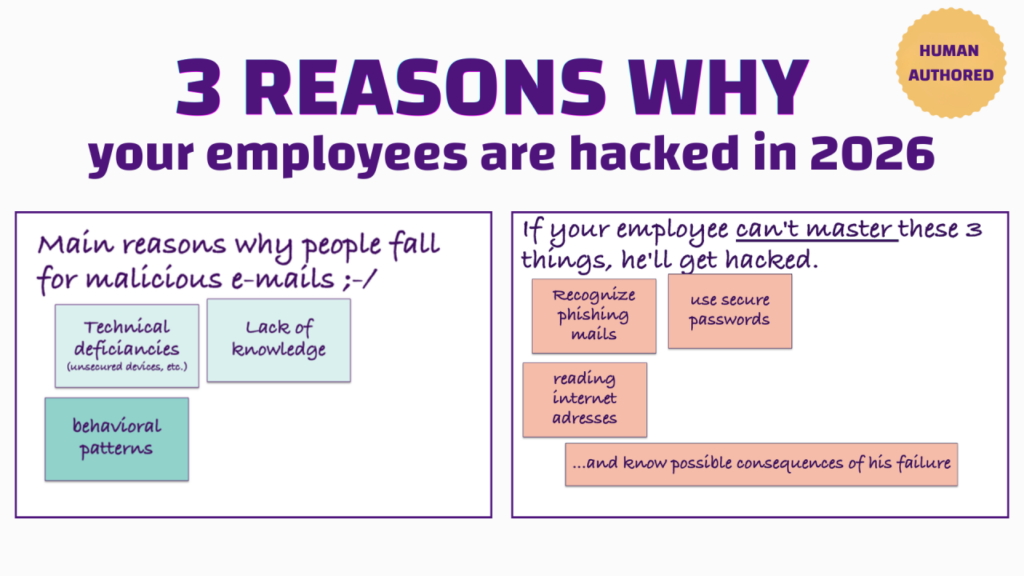
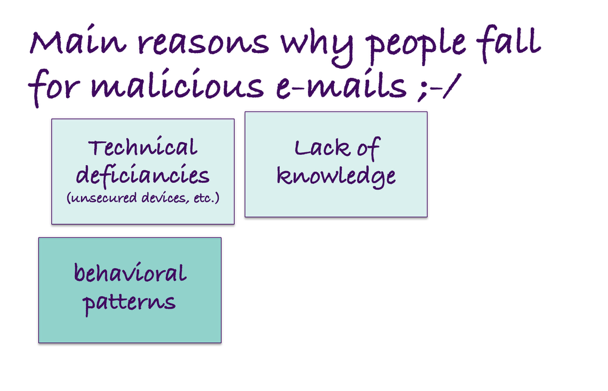
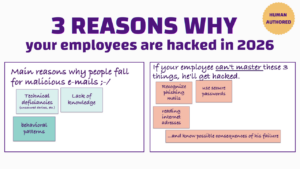
And that’s how it is today, it’s proven that at least 47% [1] of successful cyber-attacks start with a careless employee and mostly with an phishing email. Why does this happen, why do employees get caught up in it? Our experience shows that there are three main reasons why employees fall for malicious emails: 

  • Technical deficiencies (unsecured devices etc.)
  • Lack of knowledge
  • Behavioral patterns
"Main reasons why people fail for malicious emails" by Palo Stacho, MD @ CYBERDISE Awareness

If you want to counter this, then correcting technical deficiencies or misconfigurations of the PC, server and the network environment is a relatively simple measure. Most company computers today have a firewall activated, the latest updates are installed and backups are made. At least the basis for secure work is laid. Are misconfigurations then of any importance at all? Of course, because something like this can be exploited by cybercriminals if they were to gain access to the company network.

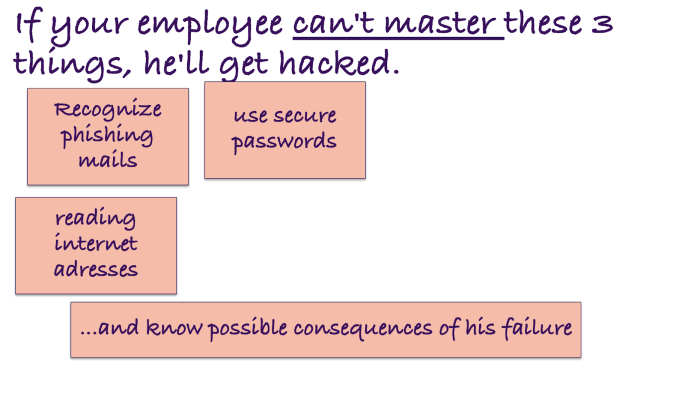
Weak IT security skills among employees are another reason why they get hacked. The demands on employees’ security know-how have increased considerably in recent years, as today an employee must have knowledge in around 20 IT security domains. This starts with 

  • recognizing phishing emails, 
  • using secure passwords,
  • being able to correctly interpret Internet addresses,
  • and knowing what business or even private consequences a successful cyber-attack can have, for example, if the employee activates a malicious Excel macro in a downloaded spreadsheet.  Yes, the challenge of training the entire workforce in IT security has become significant!

And then we come to the most dangerous reason why employees are hacked:  Human behavior patterns.

From the perspective of cybercrime prevention, personal behavior – and attitude[2] – such as gullibility, ignorance, unreflective sense of duty, overconfidence, carelessness and so on are the greatest risks that can lead to a successful cyber-attack. It is not without reason that 47% of successful hacks start directly with a careless colleague. 

"Human Behavior Patterns that employees need to master" by Palo Stacho, MD @ CYEBRDISE Awareness

Conclusion

[We | the companies | the management] are struggling with technical weaknesses, a lack of IT security knowledge and, above all, with insufficient / outdated behavior patterns among our employees. 

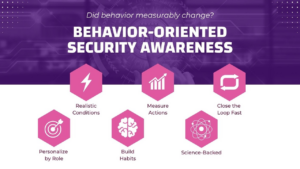
In view of this, it is clear what is being done about it: We train and improve the risk behavior (read: awareness) of our staff. And this is best done with a well-defined cybersecurity awareness program, time and with the help of a tool, which can improve behavior and not only attitude. CYBERDISE achieves exactly that, because it raises awareness by up to 60% compared to conventional anti-phishing solutions 🙂  [2]

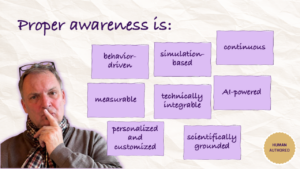
A good cybersecurity awareness program is comprehensive and mostly online. It pursues the sensitization of employees with at least these measures:

  1. Regular and realistic phishing campaigns are used to consolidate and test the knowledge among the staff. It’s not forbidden to incorporate personal data – it’s for educational purposes. 
  2. Focussed, short and repetitive training on IT security, cyber risks and the company’s security policies builds the appropriate knowledge in the employee. Trainings have to be adopted to the companies or to the users context. 
  3. The provision of a phishing reporting button including an automated message analysis ensures that employees report suspicious emails and that the messages are subject to a downstream analysis and feedback process.

The ideal tool for this is the CYBERDISE Awareness. It greatly simplifies the implementation of an awareness program and drives the behavioral change. With the solution

  • Customized Training campaigns can be carried out
  • Phishing or smishing simulations can be handled or even prompted
  • A phishing button and the incident reporting process are designed, configured and rolled out.
  • Suspicious messages are analyzed with the help of AI (and LLMs are world class for that purpose [4] ) and are offloading work from the security engineer.
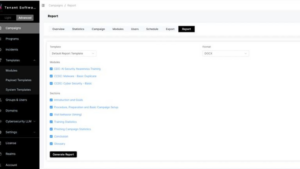
  • Management is provided with an understandable reporting system

Enjoyed reading? Subscribe to our blog!